
The Helmet Had One Job for 100 Years. Now It Plugs Into a Market Headed for US$18.9 Billion.
This Post is disseminated on behalf of Intellistake Technologies Corp.
"For more than a century, the helmet's job was to protect the soldier's head. Its next job is to extend the soldier's senses." [4]
That is Craig Micklich, founder of NanoAi Technologies, in our release on NanoAi's development license with Gentex Corporation. I have read a great many descriptions of defense technology over the years. That one is the clearest I have come across, and it is a large part of why Intellistake agreed to acquire his company.
Where the defense helmet is going
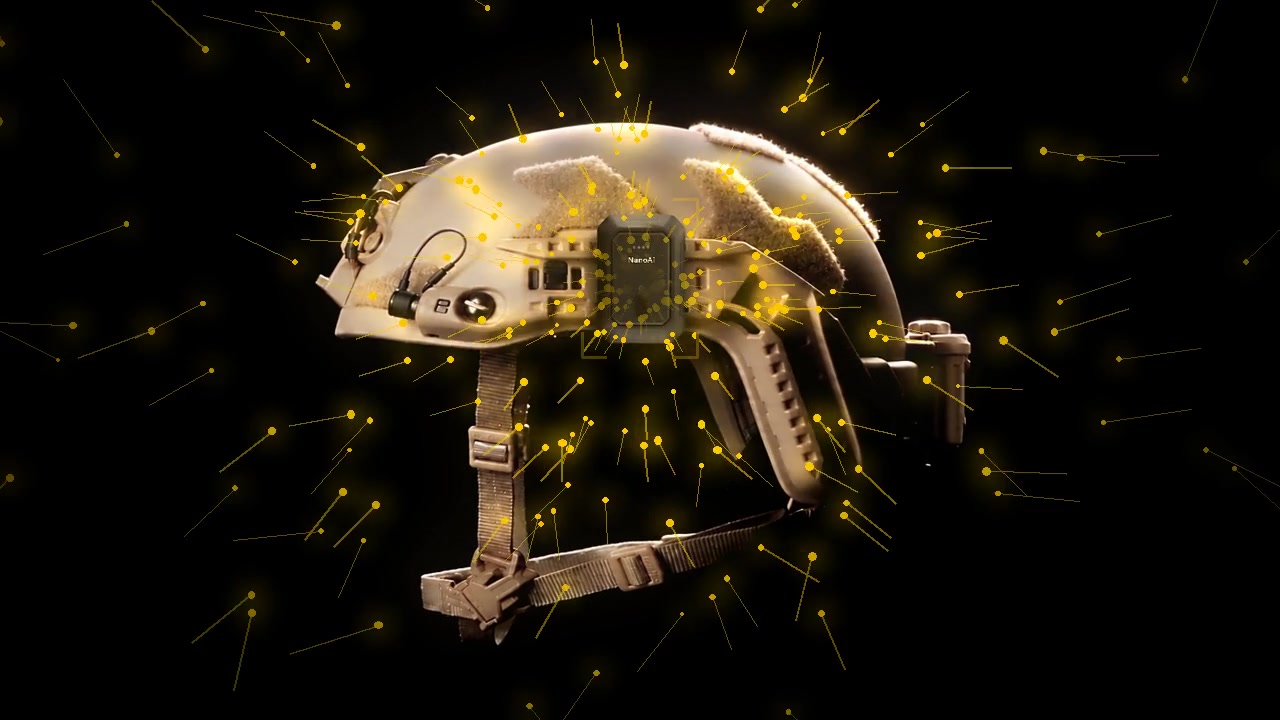
For a hundred years the helmet did one thing. Today's helmets carry cameras, night vision, radios, displays and sensors, and until recently each one needed its own battery, cable and connector, on the one place on a soldier where weight matters most. [4]
Gentex Corporation solved that.
Gentex has spent more than 130 years building headborne systems for defense forces.
Its Ops-Core helmets are in service with U.S. and allied forces, and it has supplied U.S. Special Operations Command since that command was activated in 1987. [1][10]
Its RAILINK system builds power and data into the helmet rail itself: plug in an accessory and it is powered and talking to everything else on the helmet. [3]
I keep coming back to the iPhone. In 2007 it turned a phone into a platform, and whole industries were built on top of it. I believe the defense helmet is at that moment now, and that its value is shifting from what it blocks to what it sees, hears, processes and shares.
Ten licenses. NanoAi holds one.
In June 2025, Gentex opened RAILINK to outside developers, granting licensed development agreements to ten companies. That ecosystem includes established defense names such as SureFire, Princeton Tec, CORE Survival, MOHOC and Advanced Materials and Devices. [2] NanoAi is one of the ten.
What the license gives NanoAi is the specifications for how a device connects to Gentex's rail, draws power from it and shares data across it, with Gentex's own engineers available to help. [2] It is a defined integration path onto one of the most respected helmet platforms in defense.
And it is being used. NanoAi has taken physical possession of the full RAILINK system and started hands-on development work. Over the coming months, it intends to work directly alongside Gentex's engineering team to integrate its sensor into the platform. [4]
Anyone who has watched a small company try to sell into defense knows why that matters. Qualification cycles, institutional trust and operational requirements take years to clear. A company already inside Gentex's ecosystem is very hard for a latecomer to displace.
A sense no soldier has
Finding a hidden explosive today means a trained dog, a swab or a scanner: close up, slow, one item at a time. NanoAi's sensor is designed to detect explosives, ammunition and narcotics from a distance, in real time, without physical contact. [4] On a helmet, it gives the soldier a sense of smell for threats no one can see or hear.
Craig served 12 years as a U.S. Navy SEAL, and his reason for building it is the one that stays with me:
"In many situations, the only way to confirm a threat was to approach it. NanoAi is being built to remove that requirement." [10]
Defense is NanoAi's primary vertical. Development is directed at wearable, helmet-mounted, drone, robotic, vehicle and fixed platforms, for battlefield protection and for border and installation security. [4][10]
The half Intellistake brings
A sensor that detects a threat is only useful if the right people know in time. Sensors generate data; software turns data into decisions.
Intellistake has production deployments of AI-agent systems today, and is working to develop AI systems to integrate with NanoAi. [4] Its AI and data infrastructure is intended to receive, process and route detection data from NanoAi's sensors to operators and the task force in real time, across a full defense deployment, from individual operators to drones, vehicles and fixed installations. [10] The sensor on the helmet and the software behind it, inside one company.

Third-party estimates, which I treat as context rather than forecast above.
A sensor on a powered rail, feeding an AI layer, shown to the operator. All three of those markets meet in that one sentence.
What the releases since August add up to

When we announced our agreement to acquire NanoAi on August 4, 2026, the terms were C$17 million in Intellistake shares, with vesting tied to performance milestones. [5][10] Since then, we've made several announcements providing a clearer picture of the technology, the people behind it, and the work underway. I think it's worth looking at these together.
August 11 was the science. We shared that NanoAi's detection process had already undergone more than 60,000 validation tests, with independent validation documented in a peer-reviewed study published in Scientific Reports, a Nature Portfolio journal .[5][9]
August 19 was the location. We announced a dedicated Operations Center in the Dallas-Richardson technology and defense corridor. [10]
October 6 was the leadership. We highlighted the experience behind NanoAi's leadership, spanning special operations, global-scale engineering, science and defense logistics.[10]
October 8 was the first explosive. We announced that laboratory testing against Targeted Explosive Threat 001 was underway. Explosives are the first threat category NanoAi is addressing, and successful testing is expected to support engagement with prospective defense customers. [10]
And the Gentex announcement adds another important piece. NanoAi has held a Gentex development license since June 2025, when it was one of ten companies identified as licensees. The full RAILINK system is now on the bench, with Gentex engineers involved in the integration work. [2][4]
What I find significant is how these announcements connect.
In June 2025, NanoAi was one of ten companies on a Gentex development license list. Today, we've disclosed the scientific validation behind its detection process, a dedicated Operations Center, the experience of its leadership, active explosive testing and the work underway with Gentex.
These aren't isolated announcements. Each represents another step toward bringing NanoAi's technology to market, and we'll continue to report on developments as they happen.
Disclaimer
Intellistake has entered into a definitive agreement to acquire NanoAi and Intellistake has entered into a definitive agreement to acquire NanoAi and Completion of the NanoAi transaction remains subject to customary conditions including completion of satisfactory due diligence (including verifying title to the intellectual property of NanoAi), completion of the audit of financial statements of NanoAi, the Company maintaining a minimum cash balance of $2 million and no objection from the Canadian Securities Exchange. Closing is subject to satisfaction of closing conditions in the definitive agreement.
This report contains "forward-looking information" concerning anticipated developments and events related to the Company that may occur in the future. Forward looking information contained in this report includes, but is not limited to, all statements in respect of the Company's growth and development, expectations regarding market growth, the operations and business segments of the Company and NanoAi, the functionality of the Company’s technology, and its benefits, the details of the proposed acquisition of NanoAi, the conditions to completion of the proposed acquisition of NanoAi, the benefits of the acquisition of NanoAi, the business model of NanoAi, the applications of the NanoAi technology, the synergies between NanoAi and the Company, and bridging the gap between emerging decentralized networks and real-world industry adoption.
In certain cases, forward-looking information can be identified by the use of words such as "expects", "intends", "anticipates" or variations of such words and phrases or state that certain actions, events or results "may", "would", or "might" suggesting future outcomes, or other expectations, assumptions, intentions or statements about future events or performance. Forward-looking information contained in this report is based on certain assumptions regarding, among other things, the Company will continue to have access to financing until it achieves profitability; the Company and NanoAi satisfy all conditions necessary to close the proposed transaction; the technology and blockchain industries in which the Company intends to focus its business in will grow at the rate and in the manner expected; the ability to attract qualified personnel; the success of market initiatives and the ability to grow brand awareness; the ability to distribute Company's services; the Company creates strategies to mitigate risks associated with cryptocurrency price fluctuations; the Company remains compliant with all applicable laws and securities regulations and applicable licensing requirements; the Company engages and collaborates with local experts, as necessary, to address jurisdiction-specific matters and ensures compliance with foreign regulations to avoid penalties; the Company addresses any potential cybersecurity threats promptly and effectively; the ability of the Company to develop its technology, acquire customers and have revenue; the ability to successfully deploy the new business strategy as a result of the change of business. While the Company considers these assumptions to be reasonable, they may be incorrect.
Forward looking information involves known and unknown risks, uncertainties and other factors which may cause the actual results to be materially different from any future results expressed by the forward-looking information. Such factors include risks related to general business, economic and social uncertainties; failure of the Company and NanoAi to satisfy all conditions necessary to close the proposed transaction; failure to raise the capital necessary to fund its operations; inability to create strategies to mitigate the risks associated with cryptocurrency price fluctuations; the costs of regulation in the digital asset industries increase to the extent that the Company is no longer generating sufficient returns for shareholders; failure to promptly and effectively address cybersecurity threats; insufficient resources to maintain its operations on a competitive basis; and the actual costs, timing and future plans differs expectations; legislative, environmental and other judicial, regulatory, political and competitive developments; the inherent risks involved in the cryptocurrency and general securities markets; the Company may not be able to profitably liquidate its current digital currency inventory, or at all; a decline in digital currency prices may have a significant negative impact on the Company's operations; the Company's success may depend on the continued involvement of key personnel, including advisors, whose involvement cannot be guaranteed; institutional adoption of decentralized AI infrastructure remains uncertain and may not occur at the pace or scale anticipated; evolving regulatory frameworks, including those related to AI (such as Canada's proposed Artificial Intelligence and Data Act) and prediction markets, may impose additional compliance burdens or restrict certain business activities; valuation figures are based on publicly available market data and internal assessments at the time of the referenced transactions and may not reflect current or future valuations; the volatility of digital currency prices; the inherent uncertainty of cost estimates and the potential for unexpected costs and expenses, currency fluctuations; regulatory restrictions, liability, competition, loss of key employees and other related risks and uncertainties; delay or failure to receive regulatory approvals; failure to attract qualified personnel, labour disputes; and the additional risks identified in the "Risk Factors" section of the Company's filings with applicable Canadian securities regulators.
Although the Company has attempted to identify factors that could cause actual results to differ materially from those described in forward-looking information, there may be other factors that cause results not to be as anticipated. Readers should not place undue reliance on forward-looking information. The forward-looking information is made as of the date of this report. Except as required by applicable securities laws, the Company does not undertake any obligation to publicly update forward-looking information.